Sustainability
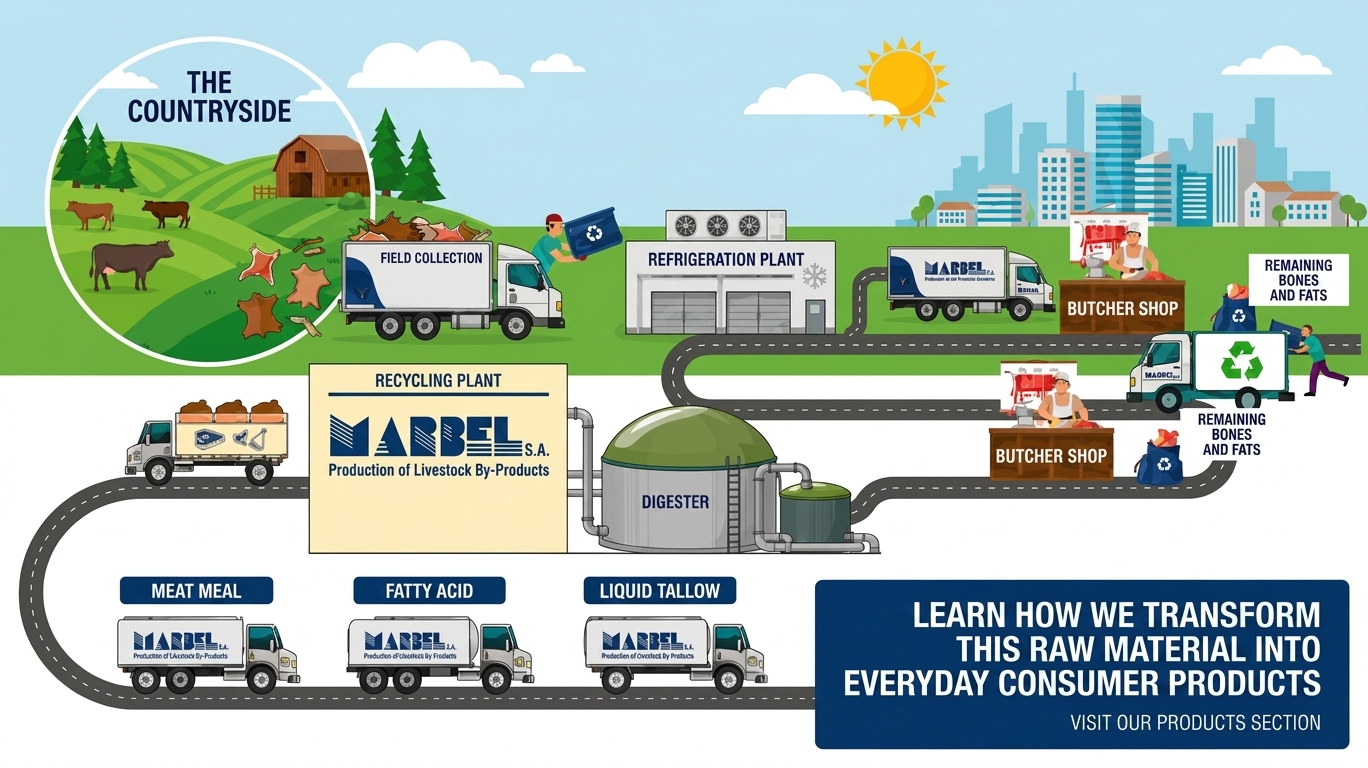
From Farm to Table: The Circular Economy Process
Our rendering process transforms livestock by-products into essential everyday resources through a sustainable, zero-waste cycle.
1. Efficient & Secure Collection
The cycle begins at meat processing plants and butcher shops. There, our specialized, dedicated trucks collect the remaining bones and fat trimmings that are not intended for human consumption.
This immediate logistics response serves as a key environmental service, preventing the accumulation of organic waste and protecting public health across the region.
Furthermore, we implement advanced traceability systems to guarantee the integrity and quality of the collected material right from its source.
2. Thermal Transformation (Recycling Facility)
All raw materials are received at our Recycling Facility, where they are processed under the most rigorous biosecurity standards.
Through a high-temperature cooking system with extended retention time, we achieve complete biological sterilization of the material—eliminating all pathogens while efficiently separating solid and liquid components
3. Everyday Consumer Products
As a result of this thermal processing, the original raw material is converted into three inputs of high biological and commercial value that are reinserted into the market:
Meat Meal: A protein concentrate ideal for animal nutrition.
Fatty Acids: Essential oleochemicals for lubricants and biofuels.
Liquid Tallow: Purified fat for refineries, the soap industry, and sustainable biofuels.
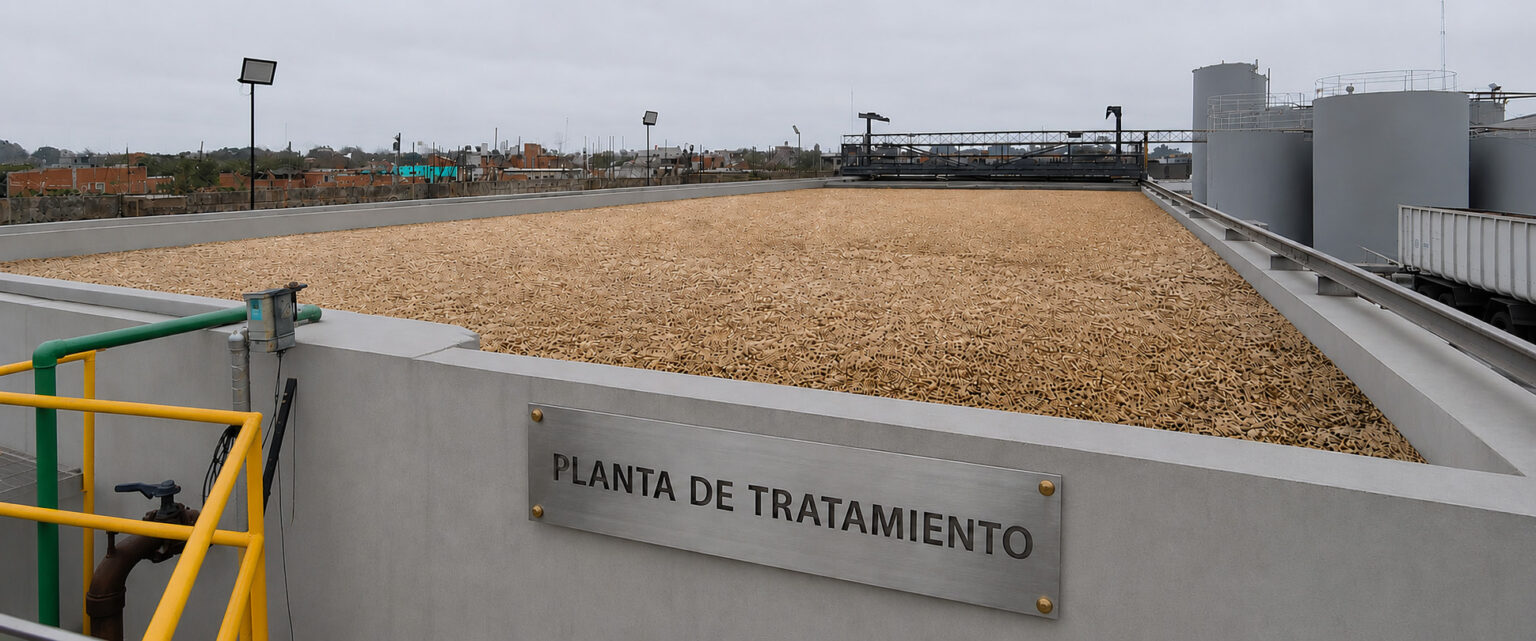
On-Site Wastewater Treatment Plant: Environmental Commitment & Responsibility
Our facility features an impressive main treatment unit engineered with the following technical specifications:
Storage & Processing Capacity: An operational volume exceeding 1,200,000 liters (1,200 m³), allowing us to handle high flow rates safely, consistently, and without overloading the system.
Management Under Strict Standards: ADA Certification
Management Under Strict Standards — ADA Certification: To ensure maximum transparency and environmental safety, our entire treatment process is strictly monitored and audited. We ensure that final effluent discharge strictly complies with the parameters established by the ADA (Water Authority of the Province of Buenos Aires).
What is the ADA? > The Autoridad del Agua (Water Authority) is the official governing body of the Province of Buenos Aires responsible for inspecting, regulating, and protecting water resources. Complying with its demanding regulations guarantees that the water returned to the environment is completely safe and free of contaminants, preserving local ecosystems and underground aquifers.
Through this investment in infrastructure, at Marbel S.A. we reaffirm our commitment to responsible industrial development and the protection of water—a vital resource for our community.
Environmental Commitment: Active Carbon Footprint Reduction
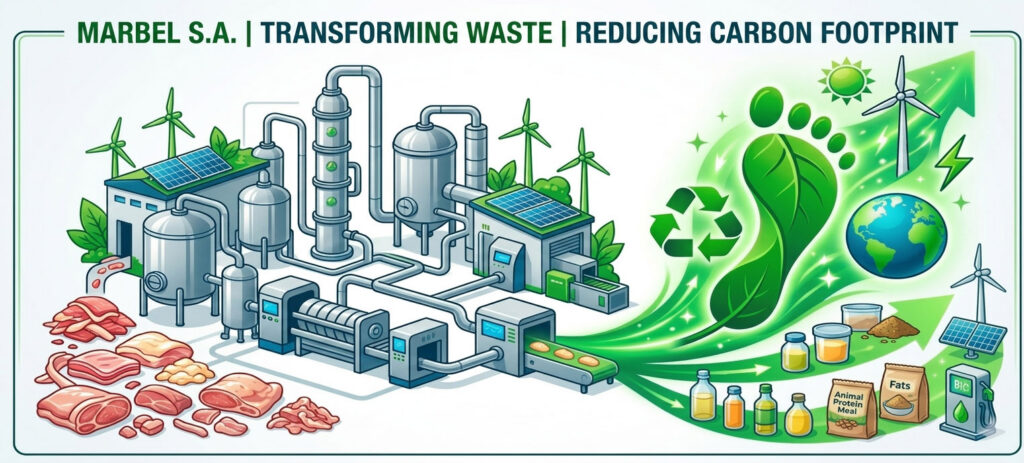
Rendering is one of the most effective global tools for climate change mitigation. At Marbel S.A., we immediately transform organic by-products before biological decomposition sets in. By doing so, we prevent the massive release of methane gas into the atmosphere—a compound with a global warming potential up to 28 times higher than carbon dioxide (Co2)—which would inevitably occur if these materials ended up in open dumps or landfills.
Furthermore, by reintroducing purified fats and concentrated proteins into local supply chains, we supply key industries for the production of soaps and second-generation biofuels. This drastically lowers Scope 3 carbon footprints across our customers’ value chains and reduces pressure on virgin plant resources.